

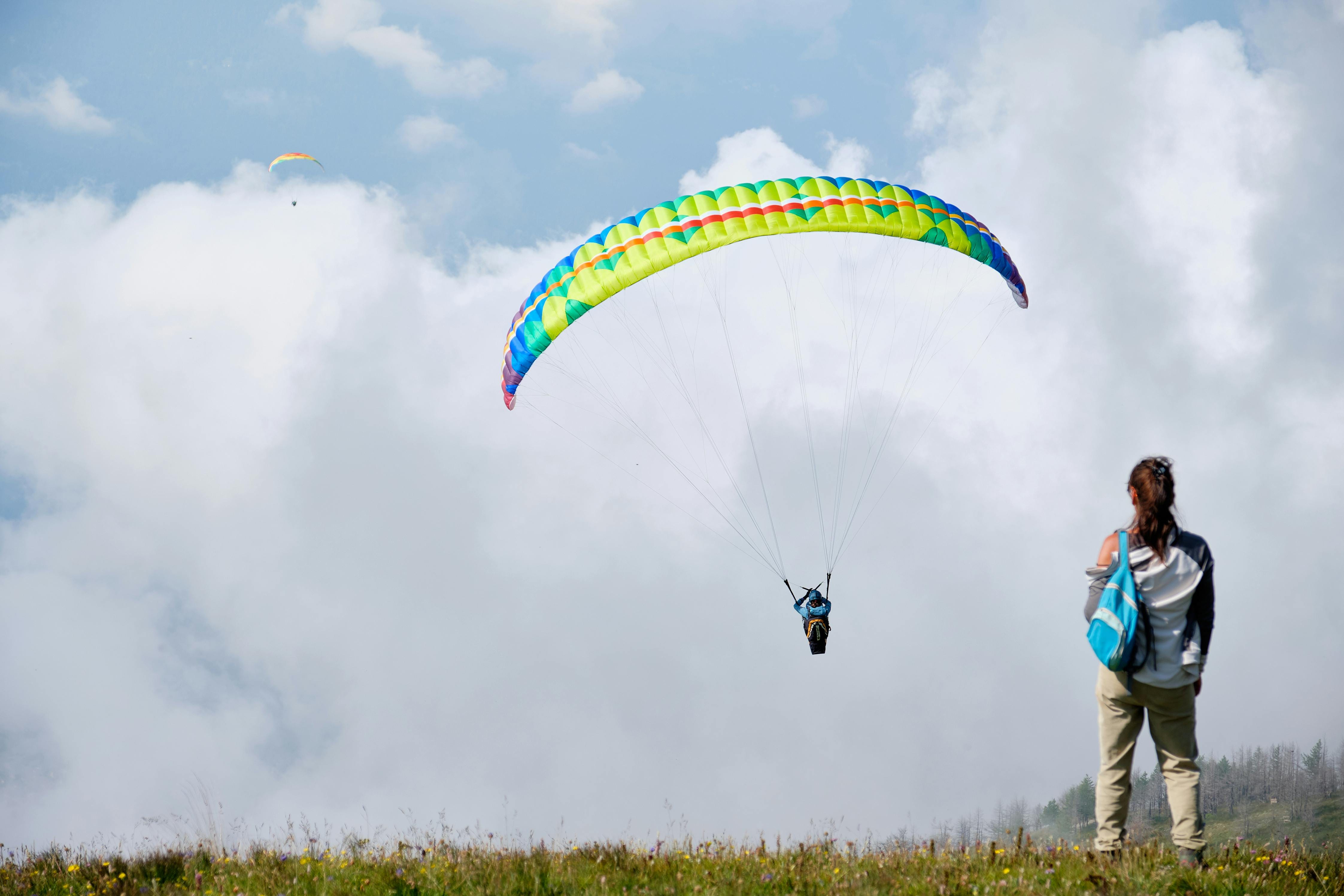
Have you ever wondered why you can have excellent ground handling skills at your training grounds, but still botch your takeoff?
That’s what happened to one of my coaching clients last week, and it reminded me of one of the most important, yet rarely spoken about, skills in paragliding.
Today I want to share a tool that, if implemented correctly, will change your paragliding forever.
But to understand why this works, we must first explore the mechanism that often causes things to go wrong.
Signal vs Noise
Peak paragliding performance happens when mind, body, and wing act as one harmonious whole.
Flow is defined as an optimal state of consciousness where we feel our best and perform our best. Fully engaged in the activity at hand decisions and actions effortlessly follow one after each other, our sense of self disappears, time passes in strange ways, and the thinking mind stops.
Thinking introduces concepts, and concepts become obstacles between us and the direct, instantaneous, feedback we need to make precise micro-adjustments onthefly.
With crystal clear signal we can flow with the feedback, mind-body-glider as one.
Until we are hit by noise.
Mental noise disrupts the feedback signal, pulls us out of flow and destroys skilled performance.
Nowhere is this more clear than on takeoff — especially when there are many eyes watching — when all our practice becomes sabotaged by external interference.
Sources of Noise
Noise comes in many forms but is commonly rooted in fear and presents itself as mental chatter.
Research in aviation and high-risk environments shows that performance-impairing “noise” can stem from emotional (fear, anxiety), cognitive (overload, novelty), and situational (new site, pressure to perform) factors, all of which disrupt attention and decision-making.
Subtle shifts in breathing, heart rate, and sweating often show up long before any noticeable drop in performance. These early physiological cues signal that overload is building in the background.
On launch, this shows up as rushing, shallow breathing, watching others instead of focusing on your wing, or getting flustered while preparing for takeoff.
Ego and trying to prove oneself is another sneaky form of noise rooted in validation seeking. This one is difficult to admit, but none of us are immune.
Becoming aware of these causes and symptoms early can help you intervene to reduce noise and boost the signal needed for peak performance.
So how do you clear the static?
How to Improve the Signal-to-Noise Ratio
Improving your signal-to-noise ratio starts with understanding one thing: thinking is the cause of all your problems.
“Thoughts create. Thinking destroys.”
— Joseph Nguyen
The body is always giving you the right information, but the mind is often too loud to hear it.
When fear, pressure, or self-judgment creep in, the signal weakens.
When awareness returns to the body, the signal strengthens again.
Mindfulness is the foundation. When you bring your attention back to the present and become aware of your thinking, the mental chatter fades. The nervous system settles.
Research across aviation and high-performance sports shows that mindfulness sharpens attentional control and reduces the brain’s tendency to fixate on irrelevant stimuli.
In flying terms, it lets you feel the wing again rather than getting lost in your thoughts. A mindful pilot hears the signal sooner and reacts with clarity instead of tension.
Breathing is the fastest way to quiet noise. Rapid, shallow breaths are one of the earliest signs that your system is overloaded. Slow, controlled breathing restores stability almost instantly.
A long exhale lowers arousal, steadies the mind, and clears internal interference. One deliberate breath before you commit to takeoff can bring you back into your body and give the wing a clean, quiet channel to communicate through.
You don’t need complicated techniques. You just need to breathe like you’re already in control.
Visualization ties everything together:
What’s fascinating about mental imagery is that the brain responds to it almost as if the event is happening.
When you rehearse a takeoff in your mind — feeling the wing rise, stepping towards it, feeling the pressure, timing the turn — you activate the same neural pathways involved in real movement.
The mind becomes familiar with the sequence. Familiarity reduces anxiety. Reduced anxiety reduces noise.
Visualizing the takeoff strengthens the motor signal while softening the interference that normally disrupts it.
You can think of it this way: the more vividly you imagine a clean launch, the quieter the mind becomes when it’s time to perform it.
This is why athletes across every high-consequence sport rely on visualization before crucial moments. For pilots, replaying the launch once or twice in your mind before clipping in can remove surprises, lower arousal, and create a sense of calm readiness.
Together, mindfulness, breathing, and visualization create a stable internal environment for flow.
They clear static, reduce interference, and allow the body to hear what the wing is telling it.
When the signal is strong, timing improves.
When noise drops, awareness returns.
And when mind and body reconnect, flying becomes fluid.
Flow doesn’t begin in the air. It begins on launch, in the moments before your feet even leave the ground.
Wingmates of the Week
Wes & Lorinda
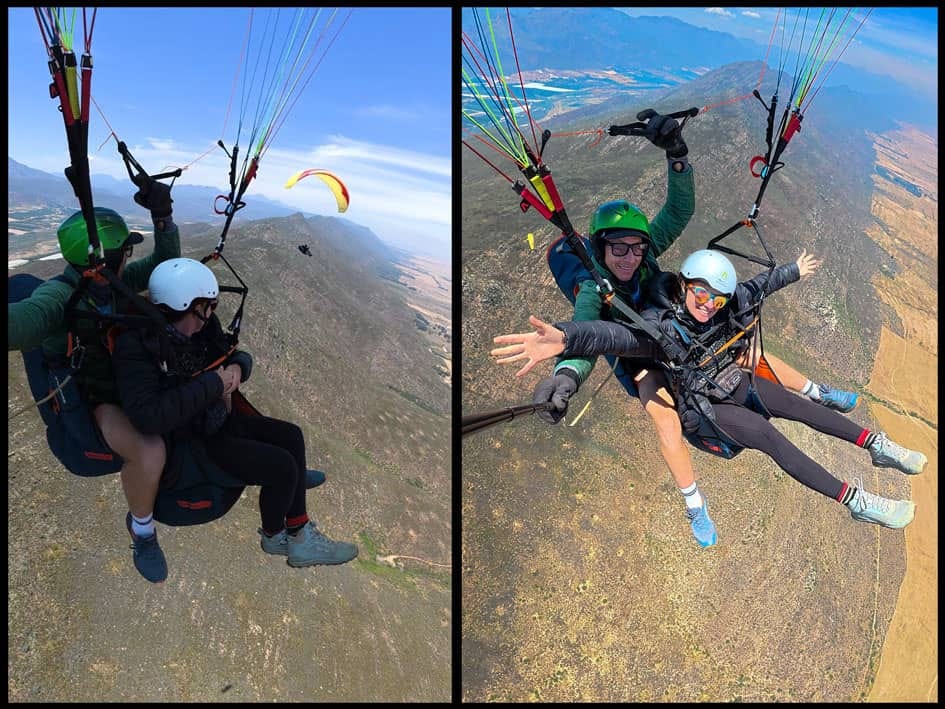
Wes and Lorinda came over from Texas for a short South African adventure.
Wes wanted guiding and to fly XC with his wife - her first tandem ever.
After 2.5 hours flying we reached our goal, 50km from takeoff and his first ever mountain crossing.
Here’s how we did it:
Focussed on a good pre-flight briefing, strategy and flight plan
I helped Wes get established in his first thermal (on radio)
We gaggle flew the entire route, sharing many thermals along the way.
Wes then executed the plan like a pro. Twice digging himself up from low by staying patient and working with me in the climbs.
Way to go buddy - what a flight!
Final Thoughts
“Mindfulness means paying attention in a particular way, on purpose, in the present moment, nonjudgmentally, as if your life depended on it.”
- Jon Kabat-Zinn
Remember: Critical comments and judgments on takeoff don’t help and can even create noise for the pilot, becoming a self-fulfilling prophecy.
If someone is struggling it might not be due to effort (like groundhandling practice) but rather due to unprocessed internal noise that they’re unaware of.
Awareness makes you not just a better pilot, but a better supporter of others — if what you learn here is applied with understanding and empathy.
Know someone who could benefit from this? Passing it on to them would be a huge compliment.
Struggling with fear and anxiety?
Read this article next…
