

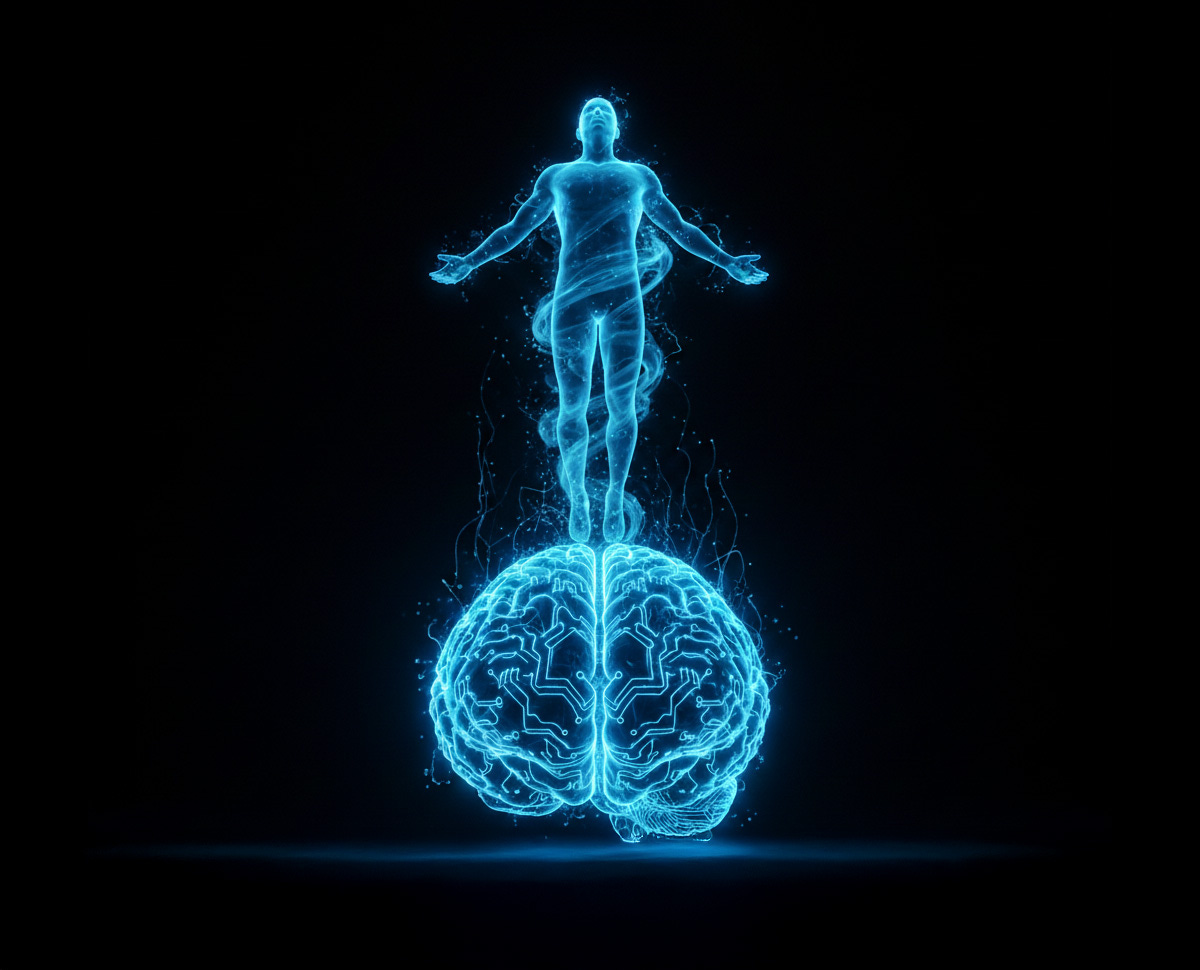
When the mind is not confined anywhere, it is everywhere. When it is everywhere, it is in the body. When it is in the body, it is in accord with the Way.
— Takuan Sōhō
It doesn’t matter how experienced you are, there’s a master key that - if applied - will improve supercharge your paragliding skill and experience.
I’ve used this to set records. I’ve used this to help my students. And now I want to share this gift with you.
But here’s the secret.
You already have it lying latent within you since the day you were born. There is nothing new for you to add or gain.
All you need to do is remove the internal barriers to allow this process to once again flow freely through you.
Today I’ll show you how.
Natural Learning
To understand this, we need to return to a simpler time in our lives.
As children we all learnt remarkable feats of coordination; crawling, walking, throwing a ball.
On the surface these skills may seem simple as we all learn them easily, but if we were to try and explain in words every nerve firing and muscle contraction needed we quickly realise that something far more intelligent than our thinking self can take credit for is taking place.
Learning to walk requires an extraordinary amount of coordination — arguably even more than flying a paraglider — yet every child learns it easily and without verbal instruction.
How?
Through a process known as natural or implicit learning: a goal directed, non-judgmental, free-flowing connection between mind and body.
Implicit learning is the non-conscious, unintentional acquisition of knowledge, skills, or patterns through experience and environmental interaction, rather than direct instruction. It involves developing an automatic, intuitive understanding—or "feel"—for complex information, such as language rules or motor skills, without being aware of what was learned.
Implicit learning is a trial and error process of discovery through experience.
Unlike implicit learning, explicit learning involves conscious effort, intention to learn, and awareness of the information being acquired. For example, learning to drive by reading a manual is explicit, while becoming a skilled driver through feel and experience is implicit.
There are a few important things to note here.
Error, or failure, is a natural and needed part of the process.
There is no “right” way.
One discovers their way through experience by taking action.
When a child learns to walk they are not impeded by judgment - that was a good or bad step - and they are not confused by technical instruction trying to break down each movement of the walk.
They simply watch others, absorb all the info and try it for themselves. They feel each movement while the subconscious mind and nervous system takes note of the result forming new neural pathways when the desired outcome is reached.
All of this through experience, not thinking.
There is no “right way” to walk just as there is no “right way” to thermal. The sooner you accept and assimilate this profound truth the sooner you can start your journey of discovery.
Because skill aquisition is a process of discovery and your style of flying becomes and unique expression of your own being.
As it was when you were a child - which you may have forgotten is in fact your natural state.
Children Vs Adults
“Those damn kids.”
Many adults watch with envy as children, seemingly without effort, take naturally to new sports like surfing, skiing, or paragliding.
Children learn faster because they don’t start with preconceived ideas. They watch, imitate, and with a clear and open mind, let their body discover what works best.
Most adults, mind full of rights and wrongs, do’s and dont’s, try to learn by memorising individual actions to create one whole movement.
The approach is to look to articles, videos, instructors, or friends for a set of concepts on the “right” way. They focus on those concepts and try to intellectualise the process, looking for the way they should do it to get it “right.”
But this ‘right’ way makes our actions mechanical, cutting us off from how it truly feels.
We are no longer being led by experience but by ideas.
Our subconscious intelligence is cut off from feeling the subtleties of our actions, the thinking ego-mind blocks us from the on-the-fly flow of information needed between the mind and body to make refinements.
In paragliding, it is more important to feel where your hands are than to know where they should be.
If you’re obsessed with shoulds; how much brake should I apply?, when should I turn in the thermal?, how flat or tight should my turn be?, then you are neglecting what is.
“Should” is a concept of the way things aren’t instead of the way they are.
The good news is that there is another way. It may take a little readjustment and some unlearning of old habits. But it is simple and has been with you since you were born.
The Master Key
The key to this process of experiential learning is body awareness, or the mind-body connection.
To have to try and remember something means you don’t really know it.
But when you are aware of an experience you learn at a level much deeper than that of the conceptual mind.
Awareness is the natural learning process of the mind and body.
Paragliding is more complex than we can explain — so how can technical instructions ever be enough?
And what of the pilots that first discovered a technique before it was ever taught?
We naturally learn by discovery - by doing rather than thinking about doing.
The quality of our learning is directly proportionate to the quality of feedback we get from our direct experience. A mind active with worry, comparison or criticism, blocks the needed feedback necessary for this learning flow.
To feel the myriad subtle sensations needed to naturally learn paragliding we need to quiet this mental activity so that awareness is increased.
The more focused and relaxed the mind the more attuned and aware it becomes. The pure form of this “no-mind” awareness born from supreme focus and trust - is the flow state, or being in the zone.
Awareness is experiencing something directly while thinking is conceptualising the experience. As thinking increases, awareness decreases and we get shut-off from this natural intelligence.
But How?
By now you may be thinking, “ok, Grant, I get it...but when are you going to teach me something practical?”
The truth is, there’s nothing to teach.
I can only try and guide you to your own discoveries by pointing you in the right direction. As the Zen saying goes:
“Do not mistake the finger pointing to the moon for the moon itself.”
There is no “right” way.
There is, however, a way that is right for you that you can discover through drills and awareness practice.
This is something that all pilots can benefit from and is something I am continuously working on in my own flying. Never settle. Always be looking for ways to increase your awareness and fine tune your skills.
This is a path of continuous improvement. Of progress over perfection.
Fly Out of Your Mind
The key here is for us to increase our awareness of our brake pressure and to become aware of what effect this has on our gliders.
We want to get out of our minds and into our bodies.
When we increase our awareness of these two aspects our body-mind will naturally make the adjustments needed over time to what feels right. It does this by making micro-adjustments as it’s connected to the raw data stream experienced through direct feedback.
We don’t need to try. Trying brings in the ego-mind, which severs the connection.
To practice this start when ground handling.
Start by assigning numbers to various levels of brake pressure such as 0 for no brake and 10 for full brakes when the glider stalls.
Now while kiting call out to yourself the level of brake applied for various maneuvers; catching a surge, keeping the glider inflated, pulling the glider up for a cobra.
Notice, without judgement the effect the various levels of brake have on the wing and where your sweet spots are.
While flying, become aware of the same feeling while turning in a thermal. Apply to both inner and outer brake pressure and notice the effect it has on your turn efficiency.
Are there any differences in weak or strong lift?
Which levels feel most right?
Allow and trust your body-mind, without thinking, to follow the feeling.
Final Thoughts
Most adults fall into the trap of trying to learn through technical instructions.
Lost in our minds we try too hard, try to memorise the “right” way to do things and compare ourselves to others judging ourselves along the way.
We think that the more effort we put in and the more information we add the better.
This active-mind state blocks the free-flow of feedback needed by the body-mind to connect to the raw data-stream of experience. We place a premium on shoulds that ultimately prevent us from experiencing what is.
Yet, we all have an innate intelligence that is capable of remarkable learning. And it learns through awareness, not thinking.
Now that you’re aware of this, you can begin practicing letting go of the ego-mind’s desire to control and tune in to a process far greater than we can take credit for.
With the ego out of our way, with gratitude, we can witness and take joy in the fruits of this experience, while simultaneously, with humility, realising that we cannot take credit for the outcomes.
All we can control is our effort, the rest is out of our control.
So get out there, find the feeling, drop the judgments — and experience the joy of flying out of your mind.